In this episode, I chat with the owner of Xenox Diamonds and luxury experience designer, Karl Schwantes. Karl is an expert at creating outstanding customer experiences and forging ideal partnerships. He is a super savvy marketer and businessman. If you’re looking to create a boutique experience in your practice, this episode is a must listen.
Gaining ideal patients is what we all want, right?
I mean, more patients is great. We all need new people coming through the door on a regular basis.
But ideal patients are the best.
When I say ‘ideal’ I’m talking about people who arrive on time, accept treatment, pay their bills and refer family and friends.
Ideal patients also share similar values and culture to you. They come in the door (almost) loving you from the word go.
A family member, friend or colleague has already sung your praises and it means you can develop a relationship more quickly and more easily than you would otherwise be able to.
We all want more of these patients.
But how do we find them?
Trust Is The Key
Here’s a little secret that not many people know.
One of the most effective ways of gaining ideal patients is to focus on internal marketing. This is also sometimes called “word of mouth” marketing.
It stands to reason that if our patients meet the criteria of an ideal patient, then it is likely their family and friends will too because “birds of a feather flock together”.
So your current ideal – or favourite – patients are the key here, and here’s why.
Dentistry relies heavily on trust. And it used to be that just being a dentist meant you were trustworthy.
Unfortunately, numerous tabloid media reports and “exposes’s” have seen the public’s trust in dentists plummet.
Which is why people rely on their friends and family to provide solid recommendations. If someone you trust recommends a service to you, you take note.
Marketing Made Simple
This is a simple strategy, but in order for it to be effective, two very important things need to happen.
The first is that you need to “Wow” your existing patients so they actually want to recommend you in the first place.
A “wow” is all about how the patient feels when they see you. It has nothing to do with technical ability.
We all accept technical ability is important but it has nothing to do with Wow-ing a patient.
Dentists get excited by parallel walls on preps – not patients.
What patients notice is how well they have been cared for.
The second important factor for generating word of mouth referrals is to make it known that you accept new patients.
Yes, it’s that simple. You ask for the referral.
Don’t recoil in horror at the thought of letting your patients know you’re open for business.
We Australians are very sensitive about being seen as overtly commercial and “American”.
Asking for a referral can be done simply, in a low-key manner and without stress.
Here’s the low down.
Care To Share
The method I teach my clients is to use a “Care to Share” Card.
These cards have the details of the practice and particular dentist on one side of the card, and an offer of some sort on the other side. (Remember to avoid time limited offers as this would breach the AHPRA guidelines).
The offer can be as simple as 2 free bitewings with a comprehensive examination. You’re only limited by your imagination.
The receptionist would introduce the Care to Share programme like this.
“Did Dr Bloggs discuss our Care to Share Program with you Mrs Jones?”
She will typically say no and the receptionist will then ask,
“Do you mind if I take a minute to explain it?”
If she says yes then the receptionist says,
“If you have enjoyed your experience with us, I’d like to offer you 3 Care to Share cards to give to family members or friends. On the reverse side is a gift we’d like to offer someone you care about. All they need to do is bring the card to our practice and we’d be happy to provide them with that gift on your behalf.”
Then hand over the cards with the offer on the reverse side. Give out 3 cards to each of your ideal patients and you’ll soon find yourself with a constant stream of patients pre-sold on you and your practice.
Don’t Dream About Gaining Ideal Patients – Create Them
This simple system has helped many of my clients’ practices grow exponentially in a short period of time.
So now you know this secret of attracting more ideal patients, it’s over to you.
Put your thinking cap on and come up with an offer for your Care To Share cards.
Get them made up and train your receptionist in how to introduce the offer.
You’ll be attracting more patients, and sky-rocketing your business in no time.
All you have to do is stop dreaming, and start taking action.
You can do that, can’t you?
In this week’s episode, I chat with Nathan Chan.
Nathan is the publisher and editor of Foundr Magazine, a digital magazine for young entrepreneurs. Nathan launched Foundr in March 2013 from his bedroom and in a small period of time it became a top 10 ranked ‘Business & Investing Magazine’ on the app store.
As publisher of Foundr Nathan was a finalist for Publisher of the Year for 2014 in the Digital Magazine awards. He has had the pleasure of interviewing some of the most accomplished entrepreneurs around the world namely Sir Richard Branson, Arianna Huffington, Seth Godin and Tim Ferris.
We chat about
How Nathan started Foundr Magazine
Key ingredients to making a successful business
Fostering your hunger
Nathan’s scary moments
The lessons learned from being sued
Key strategies for managing people
His Instagram success story and the genesis of the coffee table book
What’s important is the increased output. The fact that you can double, triple or quadruple what gets achieved.
That is well worth the effort of a little training.
So, now that you’ve got that nailed, how do you know when to delegate?
I’m so glad you asked …
When To Delegate
If you’re not sure when to delegate, just use my quick checklist.
If someone can do it better than me, delegate
If someone can do it at least 80% as well as me, delegate
If someone has the potential to do it at least 80% as well as me, train and equip them
Delegation Made Easy
Have you heard of Andrew Carnegie? His is a real rags-to-riches story.
Carnegie started work as a telegrapher and by 1899 he owned over 25% of American steel production. By 1902, he was the richest man in the world.
He was also a master delegator and believed, “No person will make a great business who wants to do it all himself or get all the credit.”
A friend of Carnegie’s once told him he worked long hours. Carnegie said:
“You must be a lazy man if it takes you ten hours to do a day’s work. What I do is get good men and I never give them orders. My directions do not go beyond suggestions. Here in the morning I get reports from them. Within an hour I have disposed of everything, sent out all my suggestions, the day’s work done, and I am ready to go out and enjoy myself.”
So if you’ve been fantasising about free time, you need to take a leaf out of Carnegie’s book.
Stop dreaming and start delegating.
Make a list of everything on your ‘to-do’ list and start putting other peoples’ names against each item.
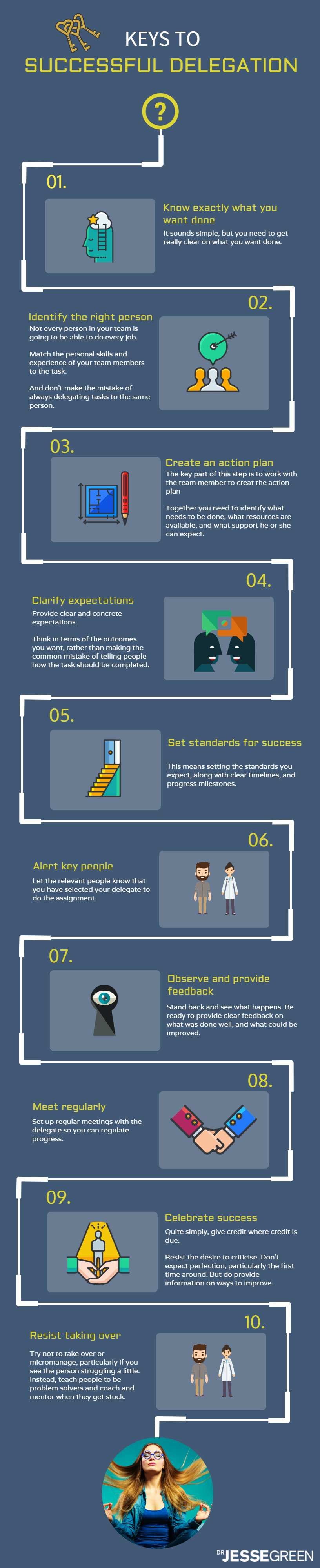
Grab my keys to success and use it as a checklist.
Then get out there and start giving your team responsibility.
They’ll thrive on the challenge.
You’ll have some free time.
And you’ll both be much happier.
What are you waiting for? A little free time is within your grasp.
Peter Shankman is a spectacular example of what happens when you merge the power of pure creativity with Attention Deficit Hyperactivity Disorder (ADHD), add a dose of adventure and make it work to your advantage. Peter is an author, entrepreneur and corporate keynote speaker. He is a “worldwide connector” recognised for his radically new ways of thinking about customer service, social media, PR, marketing, advertising, and ADHD.
We chat about:
The art of being nice in business
The customer economy
Lessons you can learn from entrepreneurs
How to harness fear and change
Peter’s superpower
Peter’s rituals to improve focus and get the most out of his day
You have that slightly guilty, sinking feeling. And then the ‘shoulds’ start.
You should be starting that project. You should be making progress. You should stop procrastinating and get on with it.
You’re not even sure why you’re not getting on with it. You know what needs doing and you know it’s important.
But you still don’t take action.
Maybe the project is big. Or overwhelming. Or scary.
Maybe you’re afraid you’ll look foolish.
Maybe you can quite visualise it being perfect.
Whatever the reason, you’re procrastinating. And you know it.
You just don’t know how to beat procrastination and bust out into action.
Enter Tim Ferris.
Tim is the author of four #1 New York Times and Wall Street Journal bestsellers, including The 4-Hour Workweek and his latest book, Tools of Titans: The Tactics, Routines, and Habits of Billionaires, Icons, and World-Class Performers.
When you’re a writer like Tim, you’re intimately acquainted with procrastination, and you have an arsenal of strategies to overthrow it when it strikes.
Here are a few from Tim.
The Tim Ferris Guide to Beating Procrastination
1. Break It Down
Break big projects down into small pieces. In fact, break it down into the smallest conceivable pieces.
2. Make It Hyper-Specific
Get super specific about the details. When do you need tasks done by? What defines success?
Tim’s example is to increase his podcast downloads. When he gets specific, he says he wants to double the number of downloads in six months.
Another example is that instead of thinking, “I want to lose weight” we should be really specific and think, “I want to lose 5 kg in the next two months”.
3. Discover The Prerequisites
Figure out if there are any prerequisites to your project. Tim gives the example of looking at existing organic and paid traffic for his podcast.
If we look at our weight loss example, we might decide that a prerequisite is to eliminate any tempting but unhealthy food in the house.
4. Establish Your Next Physical Action
Sometimes it’s difficult to establish which piece comes first, or the best order for completing a bunch of tasks. In this case, Tim says to ask yourself, “ … which one of these if done will make the rest the relevant or easier?”
5. Commit To Doing Less
Tim says we often commit to big goals, which are challenging. But then we fail to achieve them and lose momentum.
His trick to commit to doing less than you believe is achievable. That way you retain momentum.
If you commit to flossing your teeth daily, you might start by committing to flossing your two front teeth. Because it’s very achievable.
6. Make It As Easy As Possible
Make everything as easy as it possibly can be. In Tim’s example of flossing teeth, he says you might use a WaterPik or a flossing gadget to make the task easier.
7. Create Tiny Assignments
When you create tiny assignments they seem more achievable. Flossing two teeth in the morning and two in the evening is a tiny but achievable assignment.
If we look at our weight loss example we might give ourselves the tiny assignment of doing 10 minutes of activity each morning before work. Ten minutes is manageable, whereas a 1-hour workout three times a week is harder to accomplish.
8. Lower Your Standards
Stop aiming for perfection. When he’s writing a book Tim aims for “ … two crappy pages per day…”
Again, this makes the tasks within the project more achievable and more likely to be done. Writing two crappy pages – that may or may not end up in a book – is more achievable that turning out a whole chapter of beautiful prose.
If you can make yourself accountable you’re more likely to get results. Sometimes that means being accountable to others, sometimes it means finding a way to committing to yourself.
10. Meet With Yourself
Sometimes we put time in our calendar to meet with ourselves, and we blow it off. We think, “It’s only me. I can do that later” and this is another form of procrastination.
Tim tells how Mike Birbiglia – one of the most successful comedians on the planet – used a post-it note to bully himself into commitment. He wrote, “Mike!!! You have a meeting with yourself at 7:00 a.m”
So figure out a way to keep your commitments to yourself, so you follow through.
Tim has many tools in his beating-procrastination-toolkit but his key takeaway is:
“ … keep it small, keep it defined, rig it so you can win and when in doubt figure out a way to create a loss or shame if you don’t actually tackle your task and achieve some type of measurable goal by a specific point in time.”
P.S. Whenever you’re ready …. here are 4 ways I can help you grow your dental practice:
Grab a free chapter from my book “Retention – How to Plug the #1 Profit Leak in Your Dental Practice”
The book is the definitive guide to patient retention and how to use internal marketing to grow your practice – Click Here
Join the Savvy Dentist community and connect with dentists who are scaling their practice too
It’s our Facebook group where clever dentists learn to become commercially smart so that they have more patients, more profit and less stress. – Click Here
Attend a Practice Max Intensive live event
Our 2 day immersive events provide access to the latest entrepreneurial thinking and actionable strategies to drive your practice forward. You’ll leave with a game plan to take your results to the next level. If you’d like to join us, just send me a message with the word “Event and I’ll get you all the details! – Click here
Work with me and my team privately
If you’d like to work directly with me and my team to take your profit from 6 figures to 7 figures …. just send me a message with the word “Private”… tell me a little about your practice and what you would like to work on together, and I’ll get you all the details! – Click here
This week I’m joined by Jarrod Robinson who is better known as the PE Geek. Jarrod is a Physical Education teacher from country Victoria Australia, with a passion and enthusiasm for the role emerging technologies play in teaching and learning. He is first and foremost an advocate for lifelong movement and physical activity, however, realises the power of 21st-century technologies that can shape new age teaching pedagogies.
We chat about:
What the global tech trends are and what they mean for business.
What education services can teach businesses about delivering the right message at the right time
Why tech illiteracy is no longer an option
Perpetual learning
The importance of having a great web presence
How technology enables leveraged personalisation of service
How do some people achieve such meteoric success? Not just financial success but career fulfilment and personal fulfilment too.
Success on all levels.
Despite starting from the most humble beginnings.
Of course, I’m talking about Oprah.
She’s been ranked the richest African-American of the 20th Century, the greatest black philanthropist in American history, and she’s currently North America’s only black billionaire.
And yet she experienced extreme hardship in the first two decades of her life. The sort of hardships that many people find insurmountable.
She was born into poverty and raised by a Grandmother who’s highest hope was for her to become a maid to people who would treat her kindly.
She experienced considerable adversity during her childhood, saying she was raped at age nine and became pregnant at 14; her son died in infancy.
And yet she now has an estimated net worth of 3 billion USD, and many people regard her as the most influential woman in the world.
How did she do this? She had rules for success. Here they are, so you can use them too.
Your real work is to figure out where your power base is and to work out the real reason you’re here.
Once you’ve worked that out – start doing it. Start giving the world your gifts, but remember to keep working on yourself.
“The number one thing you have to do is to work on yourself and build yourself up and keep your cup full.” Oprah
5. Run The Race As Hard As You Can.
It’s not about anyone else, it’s about you running your race as hard as you can.
Everyone has competition. Every season that The Oprah Winfrey Show was on the air other talk shows would come out.
According to Oprah, over a hundred other talk shows came out while she was on the air. And every time she would think “Alright, gotta step up our game”
She did that by not to worrying about anyone else. She knew she could only control herself – not the competition.
The best athletes know not to look back at the competition when they’re racing.
“You just need to run that race as hard as you can. You need to give it everything you’ve got, all the time, for yourself.” Oprah
6. Believe
Oprah’s grandmother was a maid, and her hope for Oprah was that she would become a maid and have the opportunity to work for some good people.
But Oprah had another dream.
Somewhere deep inside she knew she wasn’t going to be a maid. She knew she wasn’t going to do other people’s laundry.
“That belief, that that would not be my life is what I held on to for the longest time. I just – no matter what – believed that there was something bigger, better, greater for me.” Oprah
7. We Are All Seeking The Same Thing
Oprah believes there’s no difference between you and her.
“If you don’t know your purpose, your immediate goal is to figure that out.” Oprah
If you don’t’ know your true purpose, or your why, you’re just blundering about in the dark.
The moment you figure out what you’re supposed to be doing, it’s like a light goes on.
And the sooner you figure out what you’re supposed to be doing, the sooner you can start doing it.
9. Stay Grounded
Keep yourself grounded no matter how high you soar.
“My life is fuelled by my being and the being fuels the doing, so I come from a centred place.” Oprah
Always seek to understand others, and have others understand you. Stay connected to people, particularly those most important to you.
Keep your feet on the ground.
10. Relax, It’s Going To Be Okay
We all get scared. Life, and building your dreams can be overwhelming.
Taking the risks you need to take to achieve success can be petrifying.
It is for every single person who goes after their dream.
“I know how scared you are. If I could say anything to you, it would be ‘Relax, it’s going to be OK’”. Oprah
So now you know Oprah’s top 10 rules for success you can use them to your advantage.
Find your purpose. Believe in yourself. And run that race as hard as you can.
You can do this. You can create success. You are just as much a winner as anyone else.
Now go and win.
P.S. Whenever you’re ready …. here are 4 ways I can help you grow your dental practice:
Grab a free chapter from my book “Retention – How to Plug the #1 Profit Leak in Your Dental Practice”
The book is the definitive guide to patient retention and how to use internal marketing to grow your practice – Click Here
Join the Savvy Dentist community and connect with dentists who are scaling their practice too
It’s our Facebook group where clever dentists learn to become commercially smart so that they have more patients, more profit and less stress. – Click Here
Attend a Practice Max Intensive live event
Our 2 day immersive events provide access to the latest entrepreneurial thinking and actionable strategies to drive your practice forward. You’ll leave with a game plan to take your results to the next level. If you’d like to join us, just send me a message with the word “Event and I’ll get you all the details! – Click here
Work with me and my team privately
If you’d like to work directly with me and my team to take your profit from 6 figures to 7 figures …. just send me a message with the word “Private”… tell me a little about your practice and what you would like to work on together, and I’ll get you all the details! – Click here
In this episode, I chat with Clarissa Rayward. She talks about challenging your industry’s conventions, and why doing so will set you apart from the rest.
Clarissa is the director of the Brisbane Family Law Centre and is an Accredited Specialist in Family Law. She is focused on supporting her clients through divorce and separation without the need for them to go to Court.
Clarissa is passionate about education. In 2013 she launched her blog – The Happy Family Lawyer where she shares her knowledge on separation and divorce to assist families at this difficult time. Clarissa has been a finalist in the Young Entrepreneur of the Year Awards for 3 years running (2012, 2013 and 2014). Her unique approach to business and to the needs of separating families has ensured that the Brisbane Family Law Centre is a leader in this field.
In this episode, we chat about:
• The development of the Happy Lawyer personal brand
• The role creativity has played in business development
It’s what you want, isn’t it? To create a prosperous dental practice I mean.
One that allows you to sleep easy, knowing that you have a reliable income.
One where you have a clear plan that you can follow through.
One that permits you a balance between work and play.
Is that fantasy? I don’t think so.
In fact, I know it’s not because I’ve created practices like that myself. And now I help other dental practice owners go from frazzled and stressed to successful and content.
You don’t have to be smarter than other people, but you do need to know how it’s done.
Because being a dental practice owner can be stressful, overwhelming and confusing. Getting some guidance can make all the difference.
So how do you create a prosperous dental practice? You need a framework.
Nothing complex or convoluted, just five simple pillars to give you some structure.
It’s all about management. A well-managed business leads to a thriving and successful business.
Like a child, your business doesn’t take care of itself. You need to manage the journey, not just hold on for dear life.
Here are the five areas that I believe you need to focus on to create a prosperous dental practice.
The process enables you to explore the strengths, weaknesses, opportunities and threats your practice is facing and make informed decisions on the best way forward.
Imagine you’re going on an overseas holiday. You don’t just pop into a travel agent and ask for ‘an overseas holiday’.
No, you plan it. You have a budget, you have an idea where you want to go, and how long you want to stay.
It’s the same in business and it’s called being financially savvy. So if you don’t already have one, get a business plan and budget in place. If you have one, give yourself a pat on the back and then review it to ensure it’s still current.
2. Implement the Plan
Executing and implementing your plan may sound simple, but it can be easy to ignore. Knowing what to do is not the same as doing what you know.
When you’ve booked an overseas holiday you know you have to arrive at the airport in time for your flights. You have to get on the right plan in order to get to your destination.
If you don’t follow the plan you’ve made you won’t have the holiday experience you hoped for. And it’s the same in business.
Because the truth is that successful people plan. And then they execute their plans well.
They create powerful plans, juggle multiple projects without getting overwhelmed and bring their whole team onboard to execute.
When we travel we often encounter problems. Flights get delayed or cancelled, aircraft refuellers go on strike, or we fall sick.
Any number of challenges are thrown at us when we travel overseas, and we can complain or cry or yell but it won’t make any difference. We can catch the next flight home and give the rest of the holiday a miss, or we can innovate.
Sometimes you need to take three different flights to make up for the one that was cancelled. Sometimes you need to stay in bed until you feel better.
Whatever you decide you need to be proactive, implement contingency plans or choose a different path. Of course, the more complex your plans the more opportunity there is for something to go wrong so do you best to simplify.
As Einstein said,
“The significant problems we face cannot be solved at the same level of thinking we were at when we created them.”
4. Track, Measure and Review
You can’t manage what you don’t measure. Tracking, measuring and reviewing will ensure you know exactly how you are travelling and allow you to adjust and tweak if you’ve gone off course.
When you’re travelling you constantly check to ensure you haven’t missed a flight or another form of transport. You check that you’re at the right hotel that was booked. You check how your finances are holding out.
When you’re away from home you need to pay particular attention to your finances. You need to stick to your budget and that can be tricky when you’re constantly converting currency.
Financial management is also crucial in your business. But it’s also important to track and measure other numbers such as case acceptance rates. When you track critical numbers you’ll know where you need to improve your business.
5. Decision Making
There are various decision-making styles and each has advantages and disadvantages. The key is knowing when it is appropriate to use each one.
An effective leader is a situational leader. They can adjust their leadership style depending on the situation.
When someone tells you that your flight has just been cancelled you might feel like yelling, but it’s not going to help. It’s far better to be charming to the one person who can help – and it’s usually the person who just delivered bad news.
Getting that person on side will result in something very special happening. They will want to help you.
If you can get them to like you, they’ll work harder to make you happy – just like your team. The way to get them to do what you want is to get them to want to help you.
Create a Prosperous Dental Practice
The way to create a successful practice is not to close your eyes, hang on and pray. You need to take charge.
You need to plan and budget, and then follow through on your plans.
You need to be proactive and creative when you control and solve problems.
You need to track, measure and review your critical figures and you need to become a situational leader.
None of that is rocket science. It’s all eminently do-able. All you have to do is decide.
You can keep doing things the way you are, or you can step up and take the reigns.
This year is almost at a close, but a new year is beginning.